Key Medical Takeaways
Essential highlights by Dr. Payal BajajA comprehensive medical guide by Dr. Payal Bajaj on how IVF success rates are determined, the impact of maternal age, blastocyst culture, and what to expect during your fertility journey.
Embarking on an In-Vitro Fertilization (IVF) journey is a life-changing milestone. When couples begin researching fertility clinics in Delhi, their first question is almost always: "What is our real chance of success?"
What Key Factors Drive IVF Success?
IVF success is not determined by luck; it is a science governed by clinical precision, lab technology, and individual health factors. Here are the core parameters:
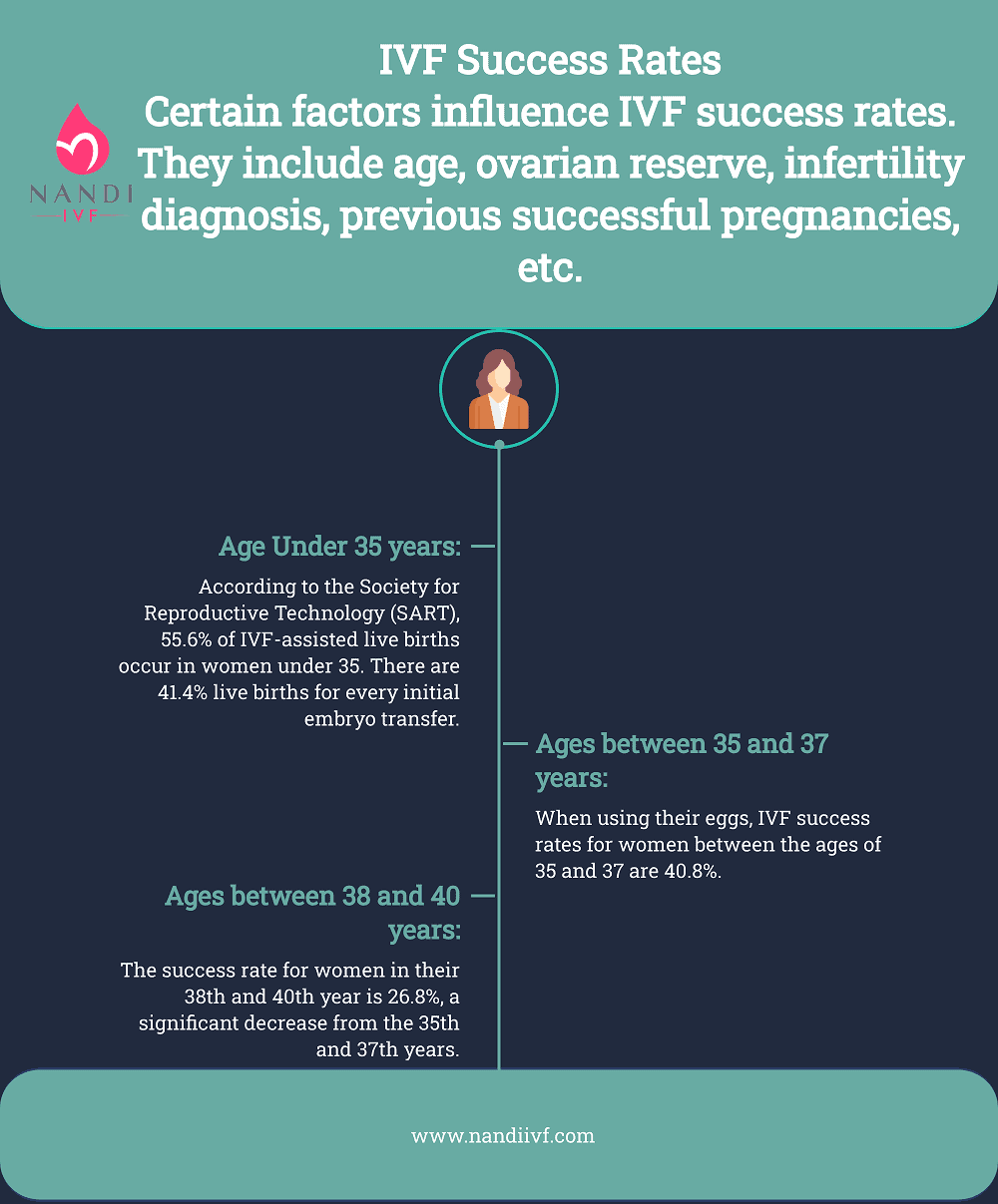
- Maternal Age: Women under 35 typically experience cumulative success rates of 75-85% over 1-2 embryo transfers, whereas women over 38 may benefit from individualized ovarian stimulation and genetic screening (PGT-A).
- Embryology Lab Standards: Advanced cleanroom technology, triple-gas incubators, and HEPA filtration ensure embryos develop in an optimal uterine-like environment.
- Blastocyst Culture (Day 5 Transfer): Culturing embryos to the Day 5 blastocyst stage increases implantation rates compared to early Day 3 cleavage-stage transfers.
- Endometrial Receptivity: Preparing the uterine lining with optimized hormonal support ensures a receptive environment for the embryo.
“At Nandi IVF, we believe in transparent, individualized care rather than standard cookie-cutter protocols. Every couple’s reproductive journey is unique.” — Dr. Payal Bajaj
How to Maximize Your IVF Chances
Preparation is key. Prior to starting an IVF cycle, both partners should undergo a thorough diagnostic evaluation including AMH testing, high-resolution pelvic ultrasound, and advanced sperm DNA fragmentation index (DFI) testing.
Frequently Asked Questions
Common questions answered by Dr. Payal Bajaj
What is the average IVF success rate at Nandi IVF?
Our cumulative clinical pregnancy rate ranges from 75% to 85% for self-cycles in women under 35, supported by Day 5 blastocyst culture and advanced embryology.
How does maternal age affect IVF success?
Age affects both egg quantity (ovarian reserve) and egg quality. However, personalized ovarian stimulation protocols and advanced ICSI/LAH techniques help improve outcomes across all age groups.
What is Day 5 Blastocyst Culture?
Blastocyst culture allows embryos to develop in state-of-the-art incubators until Day 5, allowing the embryologist to select the healthiest embryo with the highest implantation potential.

Dr. Payal Bajaj
Senior IVF & Embryology Consultant with over 20+ years of specialized clinical experience in reproductive endocrinology, blastocyst culture, and complex recurrent IVF failure cases. Over 10,000+ healthy babies delivered.